Welcome to Euro Money Exchange

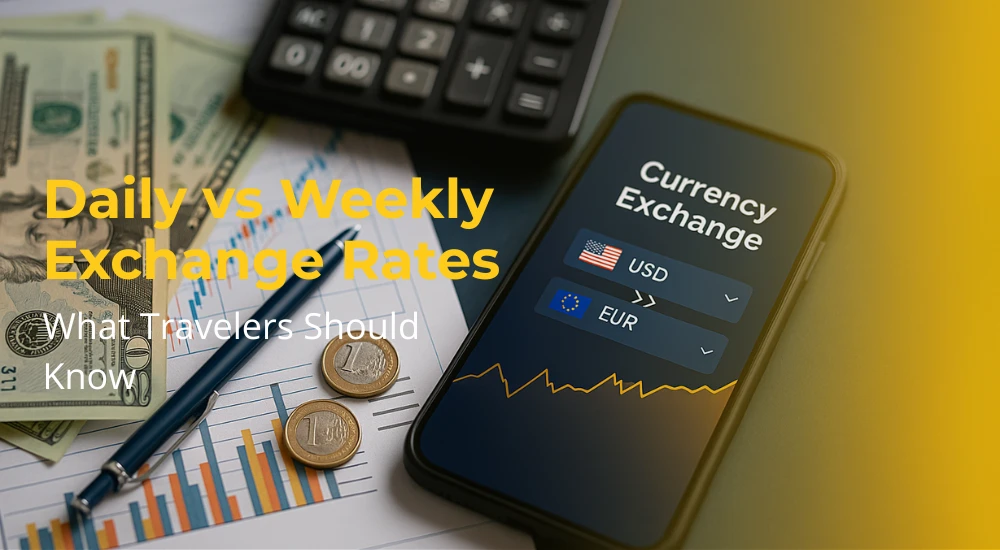
Daily vs Weekly Exchange Rates: What Travelers Should Know

When exchanging currency, timing can make a significant difference. Exchange rates fluctuate daily, sometimes even hourly, and these shifts impact how much foreign cash you receive. Understanding whether it’s better to monitor daily changes or weekly trends can help you save money and plan smarter. At EuroMoney Exchange, we guide travelers and locals in Miami to make the most out of every exchange.

Why Do Exchange Rates Change Daily?

Exchange rates are influenced by global supply and demand for currencies. Factors such as:
  • Economic news: Reports on inflation, employment, or growth.
  • Central bank decisions: Interest rate changes by the Federal Reserve or European Central Bank.
  • Political events: Elections, conflicts, or trade agreements.
  • Market speculation: Traders buying or selling large amounts of currency.
These elements create constant small shifts in value, which is why the USD/EUR or USD/MXN rate you see today may differ tomorrow.

The Impact of Weekly Trends

While daily movements are frequent, weekly trends often reveal a clearer picture.
  • Stability vs volatility: One day might bring a sudden spike, but the weekly average shows the real direction.
  • Travel planning: If you are traveling in two weeks, monitoring weekly rates can be more useful than chasing every daily fluctuation.
  • Decision making: Weekly patterns help identify whether a currency is strengthening or weakening overall.
For example, if you are sending money abroad, as in our guide on ways to send money to Mexico, understanding the trend can help you decide when to make the transfer.

Daily vs Weekly: Which Matters More for Travelers?

  • Short-term needs: If you need euros today for a last-minute trip, the daily rate is your reality.
  • Advance planning: If you are flying next month, weekly monitoring can help you buy currency when the rate is most favorable.
  • Large sums: For exchanging larger amounts, even a 1% difference between daily and weekly averages can represent hundreds of dollars.

Practical Example: USD to EUR Exchange

  • Monday: $1 = €0.91
  • Wednesday: $1 = €0.92
  • Friday: $1 = €0.89
A traveler exchanging $2,000 would receive:
  • On Monday: €1,820 On Wednesday: €1,840
  • On Friday: €1,780
This example shows how small daily shifts can add up to significant differences in the amount you receive.

How Travelers Can Minimize Risk

  • Reserve currency in advance: At EuroMoney Exchange, you can book your exchange online and secure today’s rate.
  • Split exchanges: Exchange part of your money now and part later to balance risks.
  • Avoid airports: Rates at airports are usually higher due to fees.
  • Stay updated: Use trusted sources and check both daily and weekly trends before deciding.

Why Weekly Monitoring Helps Businesses

For companies sending or receiving money abroad, weekly trends are especially useful.
  • Predictability: Budget planning is easier when based on weekly averages.
  • Reduced stress: Avoid reacting to every minor daily fluctuation.
  • Better negotiations: Understanding the trend helps businesses set contracts and prices more effectively.

When Daily Fluctuations Really Matter

There are times when the daily rate can’t be ignored:
  • Last-minute travel: Exchanging cash the day before a trip.
  • Emergency transfers: Sending money abroad immediately. High volatility weeks: During economic crises or unexpected global events.
In these cases, acting quickly can protect you from sudden losses.

Conclusion

Both daily and weekly exchange rate monitoring have value. Daily rates matter when you need money right away, while weekly trends help with long-term planning and larger exchanges. For most travelers, a mix of both approaches works best: track weekly patterns but confirm daily rates before exchanging.At EuroMoney Exchange, we offer competitive rates and the option to reserve online, so you don’t have to stress about unpredictable changes.

FAQs

Do exchange rates really change every day?

Yes. Most currencies fluctuate daily due to economic, political, and market factors.

What is the best day of the week to exchange money?

There is no universal best day, but monitoring trends helps spot favorable moments.

Should I exchange all my money at once or little by little?

Splitting exchanges reduces risk, especially when traveling abroad.

Can I lock in a rate in advance?

Yes. At EuroMoney Exchange, you can reserve currency online and secure today’s rate for pickup. Euromoney Exchange Carousel

Leave a Reply

Your email address will not be published. Required fields are marked *